
Turf Coverage That Establishes Quickly
Sod Installation in Dallas for properties needing immediate lawn coverage and erosion control
Bare soil erodes during storms, creates dust in dry weather, and leaves properties without functional outdoor areas until turf establishes from seed—a process that takes months and often fails in compacted or poorly prepared ground. Sod installation provides immediate lawn coverage for residential and commercial properties, transforming bare ground into established turf within days. Burnt Hickory Landscape Service Inc completes sod projects for new construction, landscape renovations, and properties where existing turf has failed, using proper site preparation and installation practices that support root establishment and long-term lawn health.
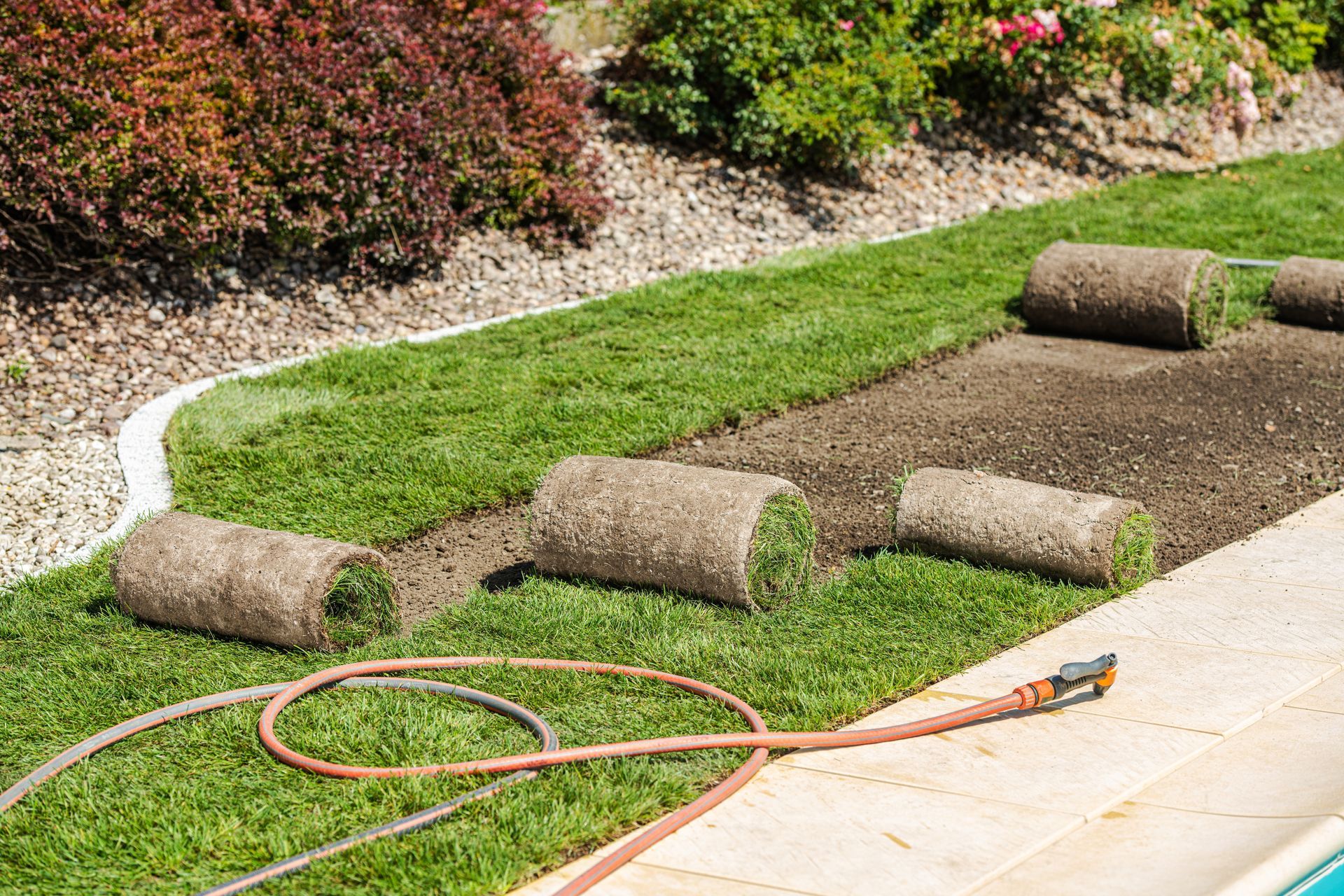
Installation begins with site preparation—grading soil to prevent low spots, removing debris and rocks, and loosening compacted ground so roots penetrate after sod is laid. Soil conditioning adjusts pH and adds organic material if needed, creating a base that supports root growth. Sod rolls are positioned tightly without overlapping, staggered like bricks to prevent seam separation, and rolled or tamped to ensure contact between sod roots and prepared soil.
Request an installation estimate to review site preparation and sod requirements.
What You Notice Once Sod Is Finished
Proper sod installation requires grading to eliminate depressions where water pools, soil preparation that allows root penetration, and tight seam placement that prevents gaps as sod establishes. Projects include soil grading, conditioning, sod delivery and installation, and initial watering to settle roots into prepared ground. Sod selection depends on sun exposure—shade-tolerant varieties for areas under trees, heat-resistant types for open areas exposed to full sun throughout the day.
After installation, you see uniform turf coverage with no bare patches, level surfaces without depressions, and seams that knit together as roots establish over the following weeks. New sod requires daily watering for two weeks to prevent drying, then transitions to deeper, less frequent watering as roots anchor into soil below the sod layer. Established sod tolerates foot traffic and mowing once roots penetrate six inches, typically three to four weeks after installation.
Sod installation includes site grading, soil preparation, sod selection based on light conditions, installation with proper seam placement, and initial watering. It does not include ongoing irrigation system installation, fertilization schedules, or lawn maintenance after establishment. Installation success depends on post-installation care—consistent watering during establishment prevents sod from drying and failing to root, particularly during Dallas summer heat when new sod dries quickly without daily watering.
What Property Owners Usually Ask
Sod installation raises questions about timing, care, and site conditions that affect establishment and long-term lawn performance.
Burnt Hickory Landscape Service Inc installs sod using preparation and placement techniques that support successful establishment and durable turf. Contact Burnt Hickory Landscape Service Inc to discuss site conditions and sod installation options for your property.
What site preparation happens before sod arrives?
Soil is graded to eliminate low spots, tilled to break compaction, and amended with organic material if testing shows poor structure or nutrient deficiency, creating a base that supports root penetration.
How soon after installation can sod be walked on?
Light foot traffic is acceptable immediately for accessing other areas, but heavy use should wait three to four weeks until roots anchor into soil and turf resists pulling or shifting.
What watering schedule does new sod require?
Daily watering for the first two weeks keeps sod moist without creating standing water, then frequency reduces to every two to three days as roots establish, with adjustments based on temperature and rainfall in the Dallas area.
Why are seams staggered during installation?
Staggered seams prevent long continuous gaps that separate as sod dries slightly during establishment, creating a stronger knit pattern similar to brickwork that holds together as roots interlock.
How does sod installation differ from seeding?
Sod provides immediate coverage and erosion control, establishes in weeks rather than months, and eliminates the risk of seed washout during storms, making it ideal for properties needing functional lawns quickly or sites with slopes prone to erosion.