
Elevation Adjustments That Prevent Water Problems
Grading in Dallas for residential and commercial properties addressing drainage issues, preparing building sites, or correcting erosion patterns
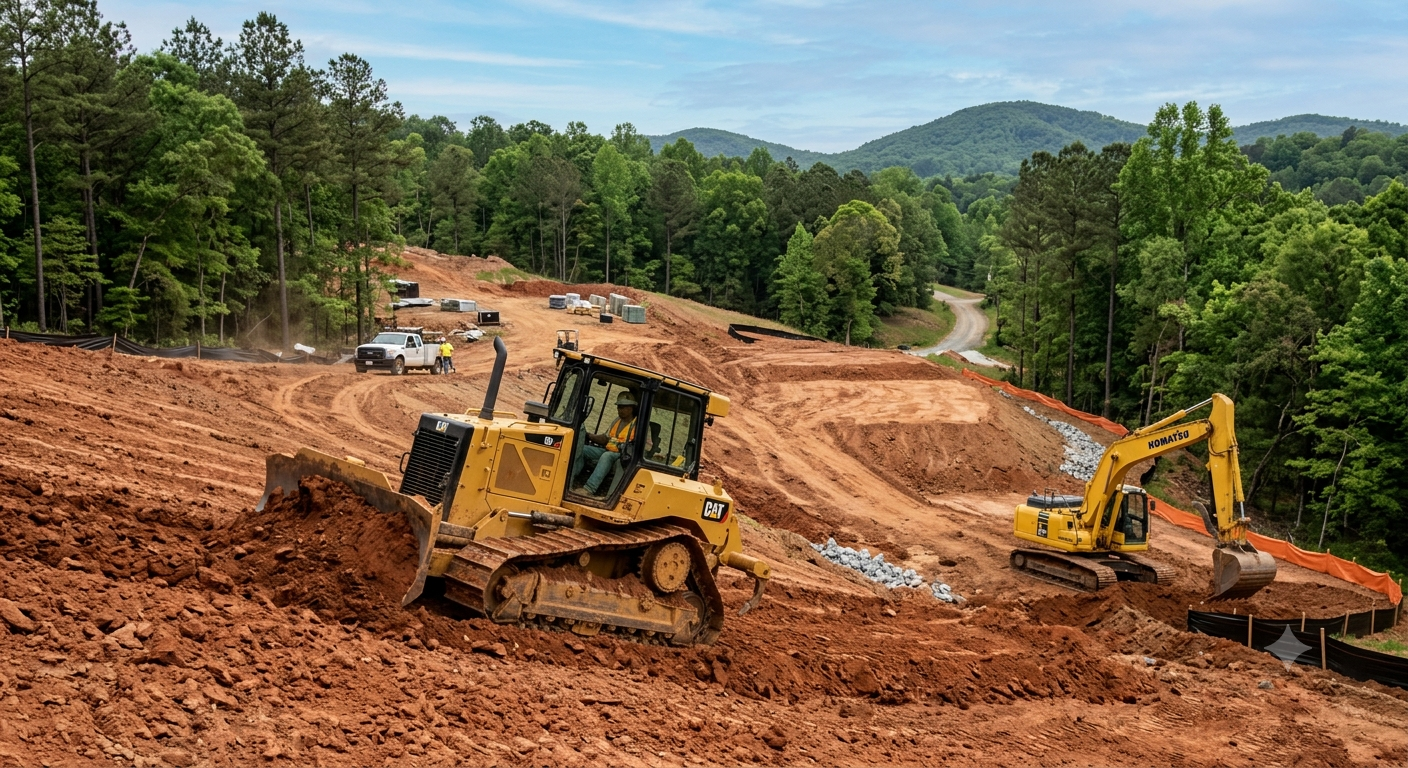
Proper grading controls where water flows across your property, preventing pooling near foundations, erosion on slopes, and runoff that damages landscaping or neighboring parcels. Grading in Dallas, Hiram, Acworth, or a surrounding area involves reshaping terrain to establish slopes that direct water toward drainage systems, creating level building pads for structures, and adjusting elevations that cause water to accumulate in driveways, yards, or low-lying areas. Burnt Hickory Landscape Service Inc uses precision equipment and attention to detail to complete rough grading for site preparation, finish grading for driveways and building pads, and corrective grading that addresses existing drainage problems.
The process begins with evaluating current elevations, identifying problem areas where water collects or flows incorrectly, and planning grade adjustments that improve drainage without creating new issues elsewhere on the property. Equipment operators reshape soil to specified slopes, compact surfaces to prevent settling, and establish grades that direct water away from structures and toward swales, drainage inlets, or natural outlets. Reducing erosion and water problems through proper elevation management protects foundations, preserves landscaping, and extends the lifespan of driveways and hardscapes.
Schedule a consultation to discuss grading needs and review how elevation adjustments will improve drainage across your property.
Why Finish Grading Works for Building Pads and Driveways
Finish grading establishes precise elevations and slopes required for building foundations, concrete pours, and paved surfaces. After rough grading shapes major terrain features, finish grading fine-tunes elevations to match engineering specifications, removes high spots that prevent uniform compaction, and creates smooth transitions between different surface heights. Equipment with laser guidance or grade control systems ensures accuracy within fractions of an inch, preventing uneven settling that causes cracks in concrete or pavement.
Once finish grading is complete, building pads are level and compacted to support structural loads without differential settling. Driveway grades slope enough to shed water but remain gradual enough for comfortable vehicle access. Water flows predictably across graded surfaces toward planned drainage features instead of pooling in low spots or running back toward foundations.
Grading for residential and commercial projects varies based on soil type, existing terrain, and the scope of construction or drainage corrections. Properties with clay soils common in Dallas require careful compaction to prevent future settling, while sites with steep natural slopes may need retaining walls or terracing to achieve stable grades.
Answers to Frequent Service Questions
Property owners addressing drainage problems or preparing for construction often ask about grading methods, timing, and results.
Burnt Hickory Landscape Service Inc completes grading projects for residential and commercial properties using equipment that ensures precise elevation control. Arrange an on-site evaluation to identify grading adjustments that will correct drainage problems or prepare your property for construction.
What is the difference between rough grading and finish grading?
Rough grading reshapes major terrain features and establishes general slopes, while finish grading fine-tunes elevations to precise specifications for foundations, driveways, or paved surfaces.
How does grading prevent water from pooling near my foundation?
Adjusting soil elevation creates slopes that direct water away from structures toward drainage systems or natural outlets, eliminating low spots where water accumulates.
What equipment is used for precision grading work?
Projects use bulldozers, motor graders, and excavators equipped with laser or GPS grade control systems that maintain accuracy within fractions of an inch across large work areas.
When should grading be completed before building or paving?
Finish grading should be completed and compacted before concrete pours or paving begins, allowing time for soil to stabilize and preventing settlement that causes cracks or uneven surfaces.
How do soil conditions in Dallas affect grading work?
Clay soils require proper moisture content during compaction to achieve stability, and grading schedules may adjust based on recent rainfall to avoid working saturated ground that compacts poorly.